Groundbreaking cancer treatment trial begins at QEHB
Published on 23/02/2026
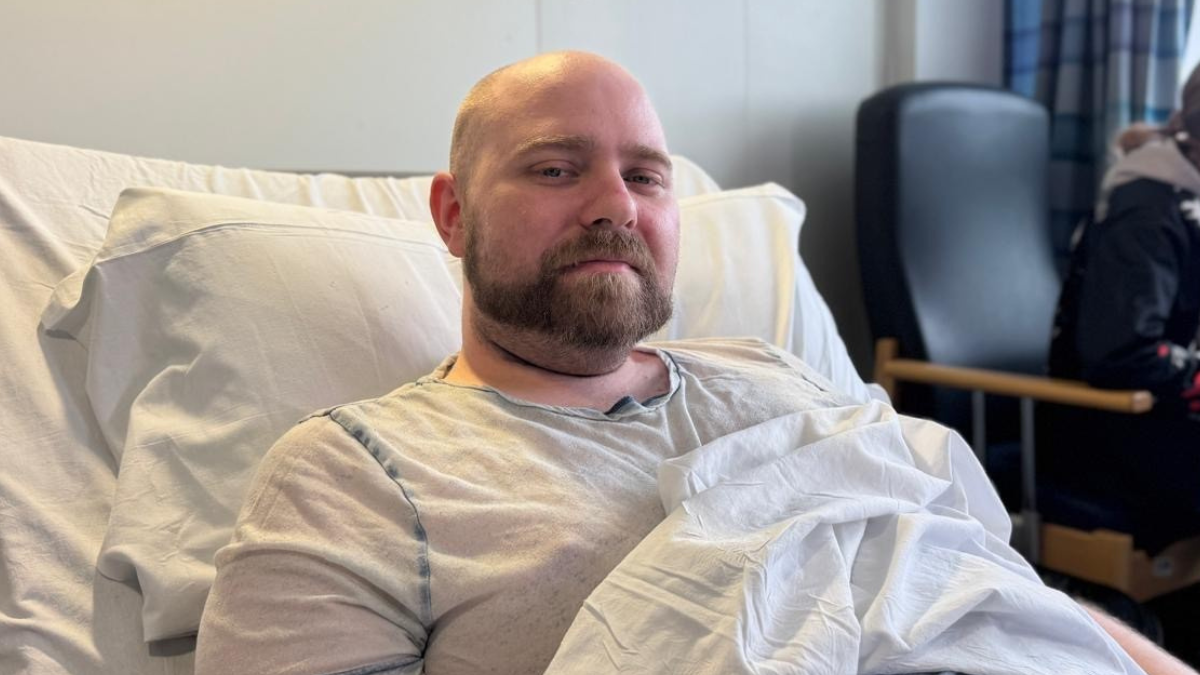
A pioneering clinical trial offering new hope to melanoma patients has launched at Queen Elizabeth Hospital Birmingham (QEHB), with Kevin Hobbs, 34, from Telford becoming the first person in the West Midlands to receive the innovative treatment.
Diagnosed last year with stage 2c melanoma, Bowling Centre Manager, Kevin’s cancer began as a mole on his back that grew aggressively over several months.
After initial delays in seeking medical advice, he was referred to dermatology specialists and underwent surgery to remove the tumour.
Further scans revealed the cancer had unfortunately spread to his lymph nodes and lungs, a life-threatening condition requiring urgent drug therapy.
Standard melanoma treatment involves using immunotherapy, that stimulates or boosts the body's natural immune system to better detect and destroy cancer cells. This treatment can be very successful at eradicating melanoma but only works in half the patients it is given to.
Kevin was offered the opportunity to take part in the TILVANCE-301 clinical trial, a cutting-edge study involving tumour-infiltrating lymphocyte (TIL) therapy alongside conventional immunotherapy to improve the chances of long-term survival.
Kevin’s treatment marks the first time TIL-therapy combined with immunotherapy has been administered in the West Midlands and the first outside of London, as part of this clinical trial.
This advanced treatment involves extracting immune cells from a patient’s tumour, multiplying them in a lab, and then reintroducing them into the body to help fight the cancer.
“My oncologist told me about the trial and said I was eligible due to my age and general health,” Kevin explained. “Statistically, it offered better odds, even if the side effects may be tougher. I’m hopeful it will lead to remission and allow me to travel again, to see places like Africa and America, and visit my stepdad in Thailand.”
Hayley Ellis, lead research nurse for haematology and advanced therapies at QEHB, described the trial as a major milestone for the hospital and the region: “Kevin was the first patient in the Midlands to receive this treatment. It’s taken a huge collaborative effort across departments, from theatre staff to oncology and pharmacy, to make this possible.”
The process of preparing for the trial involved complex logistics, including tumour resection in theatre, coordination with oncology teams, and support from pharmacy colleagues. Sister Ellis praised the multidisciplinary teamwork that enabled the trial to go ahead, highlighting the contribution of theatre colleagues and the wider research and clinical teams.
The delivery of the TIL is an intensive process, requiring high dose chemotherapy prior to TIL infusion, followed by a course of interleukin-2 infusions, a powerful immune-boosting agent known to cause significant side effects. Kevin had to stay in hospital for almost three weeks.
Kevin’s medical oncology consultant and principal investigator for the trial, Dr Lalit Pallan, said: “We are very excited to be delivering this trial at QEHB. The immune system can be a powerful force in targeting and destroying cancer cells when guided in the right way by drugs, often called immunotherapy. This large, global trial is looking to combine standard immunotherapy with an infusion of immune cells derived from the patient’s own melanoma. The hope is that the two will work together to increase the likelihood of a response and, ultimately, improve the chances of long-term survival.”
Director of the Midlands and Wales Advanced Therapy Treatment Centre, consultant haematologist, Dr Paul Ferguson said: “This has been a fantastic first for us, and I believe there is huge potential here. These trials are incredibly complex and challenging to set up, but they offer real hope for patients with often debilitating and life limiting diseases.”
“Part of my role as Director of the Midlands and Wales Advanced Therapy Treatment Centre is to expand patient access to advanced therapy trials like this one across the region. At UHB, we have established an agnostic cellular therapies team within haematology to help drive these trials forward. Our aim is to position UHB nationally as a centre that is attractive to biotech and pharma, bringing more trials and ultimately offering greater opportunities to our patients.”
Matt Metcalfe, Hospital Executive Director at QEHB, welcomed the launch of the trial, saying: “Advances like this are vital, not just for the hope they offer patients like Kevin, but for the future of centres like QEHB. We are proud to be at the forefront of research, development and innovation, and this trial reflects the strength of our highly specialised services and our commitment to delivering simply better care. It’s also testament to the dedication of our teams and the importance of investing in cutting-edge therapies.”
Kevin’s closing message as he began his journey with this new treatment was to urge anyone with a new lump, bump, mole, or mark on their skin – wherever that might be - to not ignore it and to seek help from their GP.