Inside Matt’s life-saving surgery on Surgeons: A Matter of Life or Death
Published on 16/01/2026
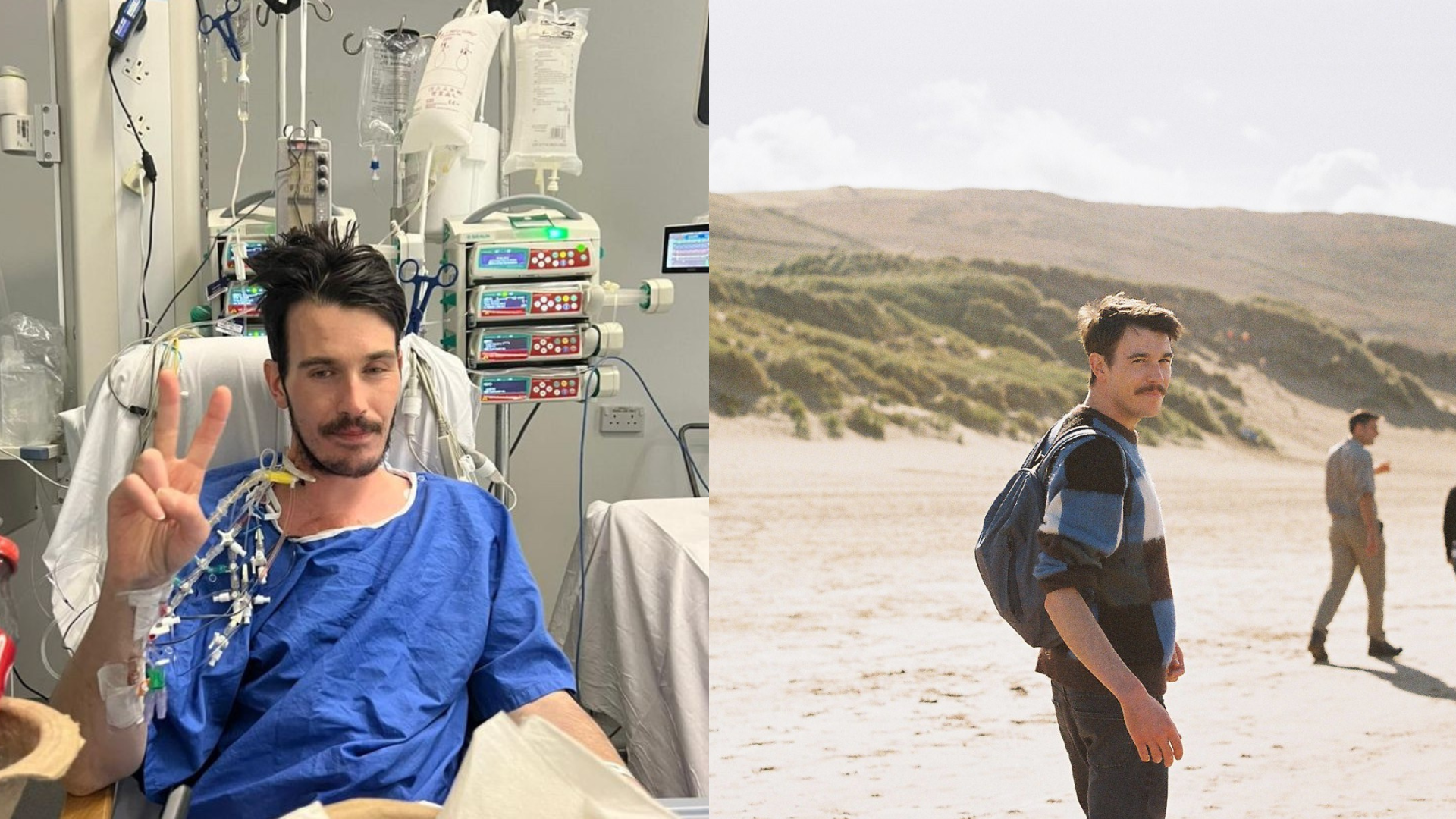
You may recognise 37-year-old Matt Ullmer, who recently appeared on our screens on Surgeons: A Matter of Life or Death as he received a life-saving heart transplant at Queen Elizabeth Hospital Birmingham (QEHB).
A keen cyclist, Matt’s life changed when he had a sudden cardiac arrest in his twenties. He shares his story with us:
“In July 2016, I was 28-years old and a keen cyclist doing long rides and road racing, which were my passion. I was out with my friends cycling, and I wasn’t feeling good from the very beginning of the ride. I kept going through phases of riding the bike and then not being able to and having to sit on the side of the road. I didn’t know what was happening, but I knew something wasn’t right.
I ended up going into cardiac arrest. I was fortunate that it happened in a little village in Oxfordshire and I went down next to a cricket pitch where two lifeguards were playing. They hopped over the wall and started administering good quality CPR straight away, the fire brigade arrived with a defibrillator and a doctor who happened to drive past took charge of the scene until specialist paramedics and the air ambulance arrived.
I was taken to John Radcliffe Hospital by land and after two or three days in an induced coma, I found out what had happened. The team explained that the likely cause was viral myocarditis, an infection which got into my heart and caused it to swell and scar, which led to the cardiac arrest.
The doctors asked whether I had felt tired or dizzy recently. Two days before, I had fainted and blacked out while cycling, I told the doctors about this, and they said I was lucky - it may have been an aborted cardiac arrest where my body managed to get back into rhythm. At the time, I had just assumed I was dehydrated.
The team did a range of tests which showed I had an enlarged heart and was technically in heart failure. They suggested the implantation of a subcutaneous implantable cardioverter defibrillator, which is a device that will monitor and deliver a shock to your heart if you have irregular heart rhythm (arrhythmia).
I was then discharged from hospital and entered what became nine years of living with quite severe arrhythmia and worsening heart failure. I received my first shock two weeks after leaving hospital. I suddenly felt really strange, like the world was closing in and got a massive wallop in the chest. Many people liken this to being kicked in the chest by a horse, and while I’ve never been kicked by a horse, I think this is a pretty good analogy. This was the first of many, and while I didn’t keep a tally, I would imagine it ran over a hundred over the course of having the device and they sometimes came in multiples.
Over the course of the next few years there was lots of coming and going from hospital, changing medications and I found a less stressful job. By October 2024, I felt that it was increasingly hard to do activity and noticed I was struggling with doing a lot of walking during a holiday and feeling exhausted.
When I was back home, I suddenly didn’t feel very well and had 6-7 shocks in the space of 40 minutes and went to hospital. I was told my heart function had severely declined over the last few months. I had an ablation procedure, which is used to treat arrhythmias, and I was then fitted with a new device which paced my heart, as well as shocking it into rhythm, in February 2025. My consultant then told me that I would more than likely need a heart transplant that year. I was referred to Harefield Hospital in London, which specialises in advanced heart failure, and given a preliminary transplant assessment appointment for summer 2025.
I was taking everything day by day up until my assessment, until everything came to a head earlier than expected. I was staying at my dad’s as I didn’t feel safe being alone. We had a normal evening and my dad and his wife heard a few noises and came to check on me, found me unresponsive and started CPR straight away and phoned 999. I was taken to John Radcliffe Hospital again, and there was a sense of ‘this is it’ and my family were told I might not make it as I had also developed sepsis and pneumonia.
After a few days, the team said there was nothing further they could do at the hospital and I needed a heart transplant. I was transferred to the Queen Elizabeth Hospital Birmingham and placed on a biventricular assist device implantation (BiVAD), a pump which supports the left and right ventricles of the heart to pump blood. It was surreal waking up from the surgery to see the tubes and machine doing the work for me. I was told it was now a waiting game, and I would be on BiVAD until a suitable donor is found, which could be tomorrow or in three months’ time.
I tried my best to get as strong as possible before the transplant. I was walking up and down the long corridors of the hospital, trying to beat another patient’s record of 10 laps of the corridor - I got ten laps on the day of the transplant.
I received my transplant a few weeks after I came to QEHB. I spent a couple of days on the intensive care unit before going to Ward 728. In the end, I was discharged the same week that my original transplant assessment appointment had been scheduled for, which felt full circle in a way.
I wanted to take part in Surgeons: A Matter of Life or Death as I wanted to raise awareness, especially with being on the younger side, and to be able to showcase what medicine and these amazing surgeons can do.
My main message would be that this can happen to anyone - even if you think you are fit and healthy. I had a young bloke attitude and thought I was invincible - I was fit, healthy, ate healthily and felt like the chances of anything happening was super slim. If anyone thinks there may be something wrong, don’t ignore it and have it checked out.
Myocarditis is a nefarious condition and can often be asymptomatic. When they told me what it was when I came round the first day, I had never heard of it. It does unfairly target young and seemingly quite athletic people.
Everyone has been amazing - the surgeons, nurses, critical care team, transplant team, Ward 728 – there have been so many people that have helped me, and I am very thankful to the teams at both QEHB and John Radcliffe Hospital.”
Surgeons: A Matter of Life or Death airs weekly on Wednesdays at 9pm and is available on catch up via My5.