Robotic milestone for cancer treatment at Solihull
Published on 02/02/2023
Anthony Bates, from Birmingham, opted to have a ground-breaking procedure to remove his prostate, following a cancer diagnosis in late 2022.
It was the 300th robotic urology procedure carried out at Solihull Hospital.
Anthony, 61, said: “When I was diagnosed with prostate cancer and given the options, it was a ‘no-brainer’ to have the prostate removed. And the robotic technology meant it would be a less invasive operation, so I’d recover quicker.
“It was only down to luck that I went to the GP when I did. I heard a talkSPORT radio interview with ex-Birmingham City footballer, Mick Harford, who was diagnosed with prostate cancer in late 2020 and some of the symptoms he was describing sounded familiar.
“I’d initially put symptoms, such as a weak urine flow, down to age. I went for a blood test and examination, where a lesion was found. I then had an MRI scan and biopsy at Solihull Hospital.
“When I was contacted by a specialist nurse to say I had prostate cancer, I was so surprised that I passed out due to the shock. But the team went through my options, and as the cancer was contained in the prostate, I’m hopeful its removal will result in me being cancer-free.
“All of the team involved in my diagnosis and following treatment have been fantastic. It was explained to me that the robotic surgery would involve making six small cuts in the stomach. This was less invasive than in traditional surgery, which would mean I’d recover more quickly and go home sooner.
“The technology is amazing. A day after surgery on 6 December, I went home, and was able to enjoy Christmas with my family.”
The innovative technology has benefited many patients like Anthony, since the first robotic surgery took place at Solihull Hospital on 15 March 2021.
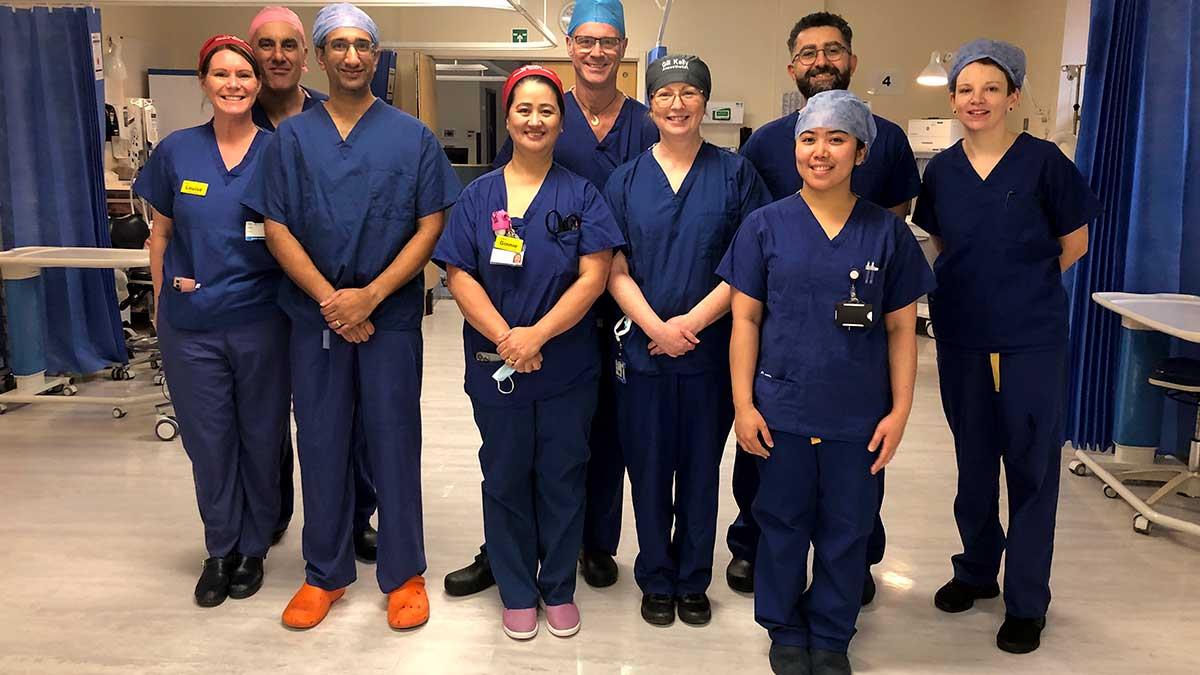
Urology consultants, Mr John Parkin, Mr Ather Abdelbaky, and Mr Keval Patel started this type of surgery in March following the COVID-19 pandemic, with support from the theatre team.
Mr Patel said: “The robotic system gives us much more control over the procedure. Using a remote system in the operating theatre to control the arms of the robot, we are able to make keyhole incision in the patient’s abdomen, which is smaller.
“As a result, of the robotic system, the procedure is much more accurate, and for the patient, they are in less pain after the operation, and able to recover and get back to daily activities much more quickly.
“We now carry out robotic urology procedures twice a day, three times a week, so are reducing length of hospital stays, as well as waiting lists, and ensuring patients with a cancer diagnosis receive the life-saving treatment they need sooner.
“I’m extremely proud that we have reached this milestone and of the team for the determination and efforts they make to provide the best possible treatment and care for patients like Anthony.”