Stroke education event a success
Published on 03/04/2026
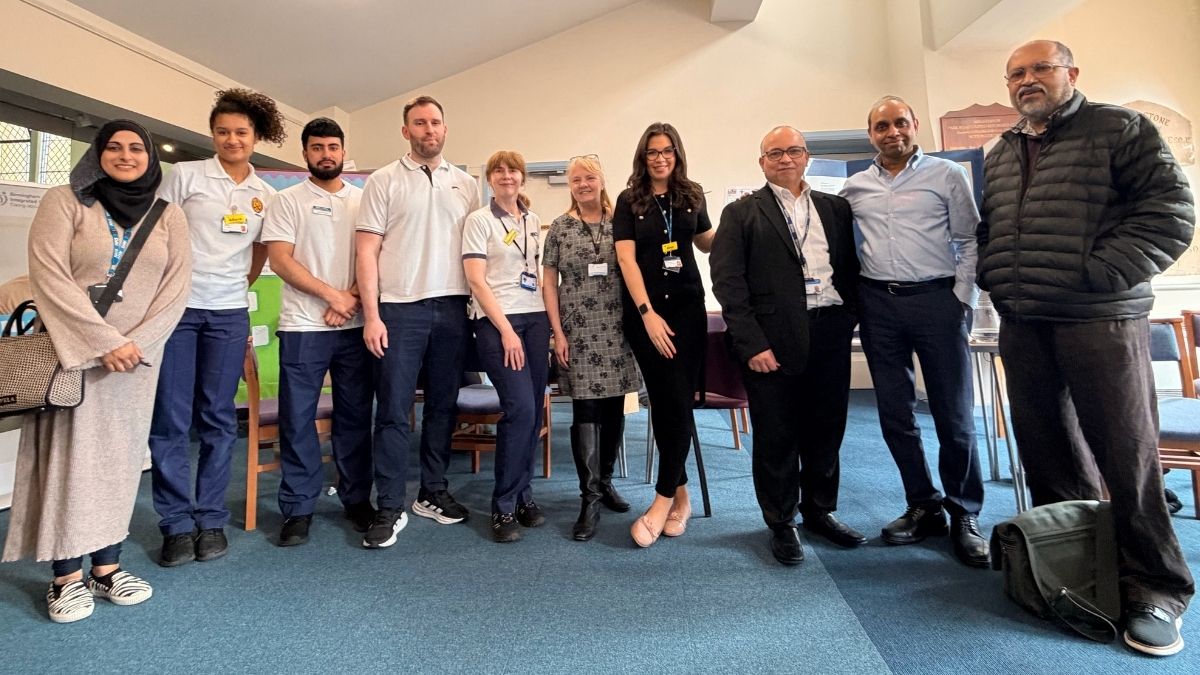
Over 50 patients, along with their friends and family, can now spot the signs of stroke more easily thanks to an education event led by Good Hope Hospital.
Invitations were sent to patients who had attended the hospital’s emergency department or stroke outpatient clinics over the past few months and were identified as having a transient ischaemic attack (TIA) or ‘mini stroke’.
After looking at the clinic letters of these patients, the stroke therapy team noted the most common cardiovascular risk factors included high blood pressure, high cholesterol and atrial fibrillation, a type of heart rhythm problem where the heartbeat is not steady.
The multi-partner education session, held at Sutton Coldfield United Reformed Church, was designed to look at these topics specifically. Sessions were led by Good Hope Hospital’s Dr Khaled Darawil, Stroke Consultant, and Professor Sudarshan Ramachandran, Consultant Chemical Pathologist and Professor of Metabolic Medicine.
Caroline Graham, Therapy Lead for Stroke and Neurology, said: “We know there is a lack of awareness and delays in seeking urgent treatment for stroke, so it’s vitally important that people know the signs and symptoms. The Act FAST campaign is a useful aide memoir and was highlighted in the session.
“We also wanted to focus on prevention, a key objective of the NHS 10 Year Health Plan. Colleagues from Birmingham and Solihull Integrated Care System shared the ‘Know Your Numbers’ campaign, encouraging patients to get free blood pressure checks at local community pharmacies. We also shared Arrhythmia Alliance’s ‘Know Your Pulse’ initiative to identify atrial fibrillation. People often aren’t aware they have high blood pressure or atrial fibrillation and how these conditions, if left untreated, increase the risk of stroke, which is a life-changing event.”
Stroke is preventable, and various hospital teams attended the session to educate patients about lifestyle changes to help reduce their cardiovascular risk factors, such as healthy eating, reducing alcohol intake, smoking cessation, and physical activity. Teams from Good Hope Hospital included the lipid clinic, alcohol care team, tobacco care team, physiotherapists, and dietitians.
The event, attended by over 100 people, was a collaboration between Good Hope Hospital, Royal Sutton Coldfield Town Council, Birmingham and Solihull Integrated Care Board, The Pioneer Group/Age Connects West Midlands representing Sutton Coldfield Neighbourhood Network Scheme, and voluntary sector partners such as the Stroke Association and Headway.
Caroline added: “We brought together some brilliant resources, apps, and digital devices to help people with self-management and understanding when they need to seek medical advice. Sadly, we are seeing higher numbers of TIA patients attending our stroke clinics at Good Hope Hospital, and seeing younger patients, so education about how to reduce cardiovascular risks plays a vital role.”
This integrated health and care approach for local people is part of the Birmingham and Solihull Community Care Collaborative which encourages local health and care partners to work together to provide better joined up health and care services in our neighbourhoods to meet the needs of our local population.