University Hospitals Birmingham secures £1.4 million for new cleanroom manufacturing facility
Published on 26/05/2026
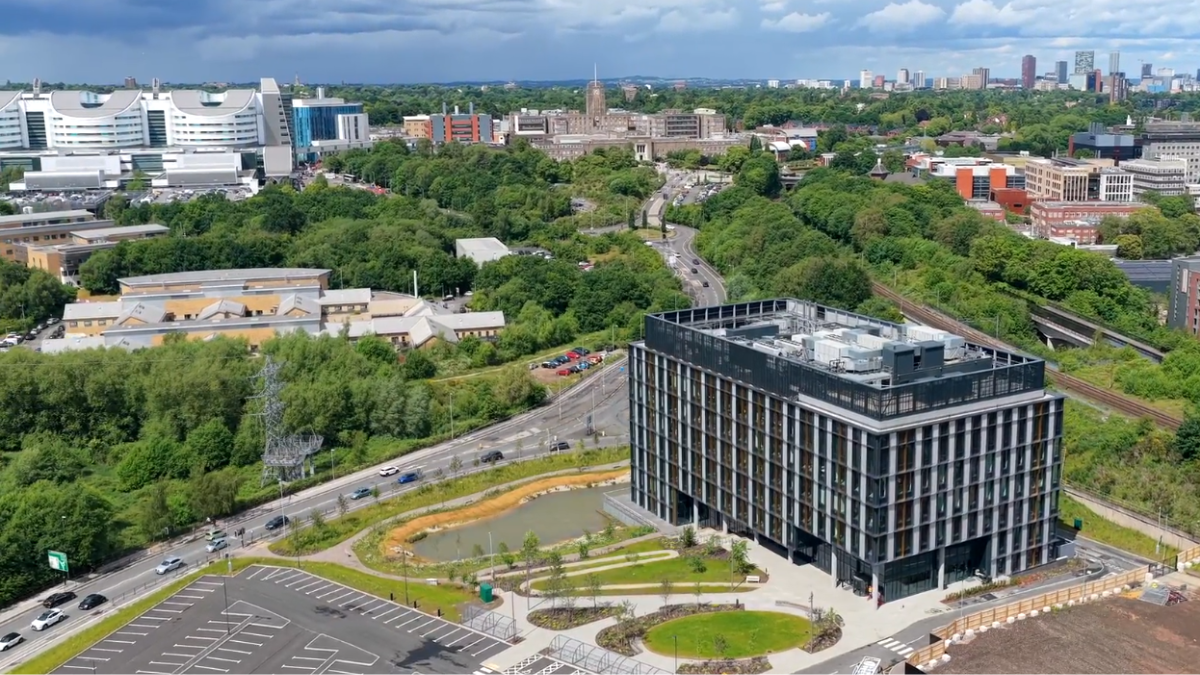
University Hospitals Birmingham (UHB) has secured £1.4 million from the National Institute for Health and Care Research (NIHR) to support the development of a new cleanroom manufacturing facility within the Precision Health Technologies Accelerator (PHTA) at Birmingham Health Innovation Campus.
The 440 sq m facility will provide specialist capability for the preparation and early-stage manufacture of innovative medicines and advanced therapies for use in NHS clinical trials across the Midlands.
Once operational, it will enable patients to access cutting-edge treatments, including chemotherapies, immunotherapies, and cell and gene therapies.
A national shortage of cleanroom capacity has long been a barrier to research, with ageing infrastructure and limited facilities contributing to trial delays and the relocation of promising studies overseas.
The West Midlands faces particular pressure, with existing NHS aseptic facilities already stretched by routine treatments, including cancer care, leaving limited capacity for new medicines such as personalised therapies.
Developed over three years of collaboration between UHB, NHS Trusts, PHTA, the University of Birmingham, and regional life-science companies, the new facility aims to tackle this shortage while supporting both healthcare and drug development needs.
Jonathan Brotherton, Chief Executive at UHB, said: “We are proud to bring this state-of-the-art cleanroom facility to one of the UK’s most diverse and underserved regions. By expanding access to clinical trials, we can ensure new therapies are tested on a wide range of patients and that the benefits of research are shared more equitably across our communities.
“This investment not only reinforces the West Midlands as a centre for innovation but also gives local patients the chance to access the latest treatments closer to home.”
The co-location of the Queen Elizabeth Hospital Birmingham (QEHB), the University of Birmingham and PHTA enables strategic collaborations of this type across Birmingham Health Partners and the wider life sciences sector.
UHB will produce clinical trial supplies for the NHS in the facility ensuring patient safety and quality standards, and the unit will be staffed by a dedicated team of specialists who will operate the facility in line with Good Manufacturing Practice (GMP) regulations – ensuring medicines are manufactured to pharmaceutical industry standards.
The funding is part of a £47.8 million national investment awarded to 51 NHS Trusts and 79 primary care organisations across England to pay for equipment that will boost the NHS’s ability to deliver high-quality commercial research and accelerate clinical trials.
Professor Lucy Chappell, Chief Scientific Adviser at the Department of Health and Social Care (DHSC) and Chief Executive Officer of the NIHR, said: “This significant investment will provide the NHS with the high-quality equipment and facilities it needs to deliver cutting-edge commercial research that benefits the public.
“With more than half of the funding this time going to primary care providers, the NIHR is once again showing its commitment to shifting research out of hospitals and into local communities, giving patients direct access to innovative treatments, and making it easier for everyone to take part in research.
“This helps to make research more equitable, enhances the UK’s reputation for delivering world-class commercial research, and helps position the country as an attractive place for companies to invest.”
Professor Gino Martini, Chief Executive Officer at PHTA, said: “This facility is urgently needed in the West Midlands and it’s incredibly important that it will be used by both NHS and small pharmaceutical businesses – improving treatment for patients and creating highly-skilled, well-paid jobs for local people.
“The cleanrooms will enable the manufacture of advanced therapy medicinal products (ATMPs) like cell and gene therapies, as well as mRNA vaccines and medicines for clinical trials. It’s no accident that this is happening in Birmingham, a city which already supports more than half of all UK ATMP trials, and is internationally recognised for the design and delivery of innovative trials.”
The cleanroom will feature a number of specialist engineering and design elements such as controlled material and staff entrances and exits, air pressure cascades, and pharmaceutical-grade heating, ventilation, and air conditioning (HVAC) systems - ensuring the quality, safety, and regulatory compliance of products for research patients and providing a safe operating for the unit’s specialist staff.
A substantial part of the new facility will be used by UHB, with other West Midlands NHS organisations able to access it through formal agreements. This shared approach will help attract more research to the region, giving local patients the opportunity to benefit from the latest experimental treatments without impacting routine NHS services.
The remaining space will be available to pharmaceutical and small commercial companies, allowing them to manufacture small batches of investigational medicinal products without needing their own specialist facilities. This will support local drug discovery, keep research in the UK, and strengthen the West Midlands as a hub for medical innovation – as well as building further resilience into the NHS by enabling the rapid production of medicines and vaccines during potential future health emergencies.
PHTA opened in 2025 and is the University of Birmingham’s flagship health and life sciences research facility. As well as the cleanroom facility, it offers 70,000 sq ft of collaboration and innovation space including Category 2 wet and dry labs for start-ups and scale-ups, a medtech prototype development Makerspace, and wraparound business development and commercialisation support.
This article is part of our research news collection.
Visit our dedicated research site for more research and innovation news from UHB.