First lung transplant through pioneering national programme
Published on 20/08/2026
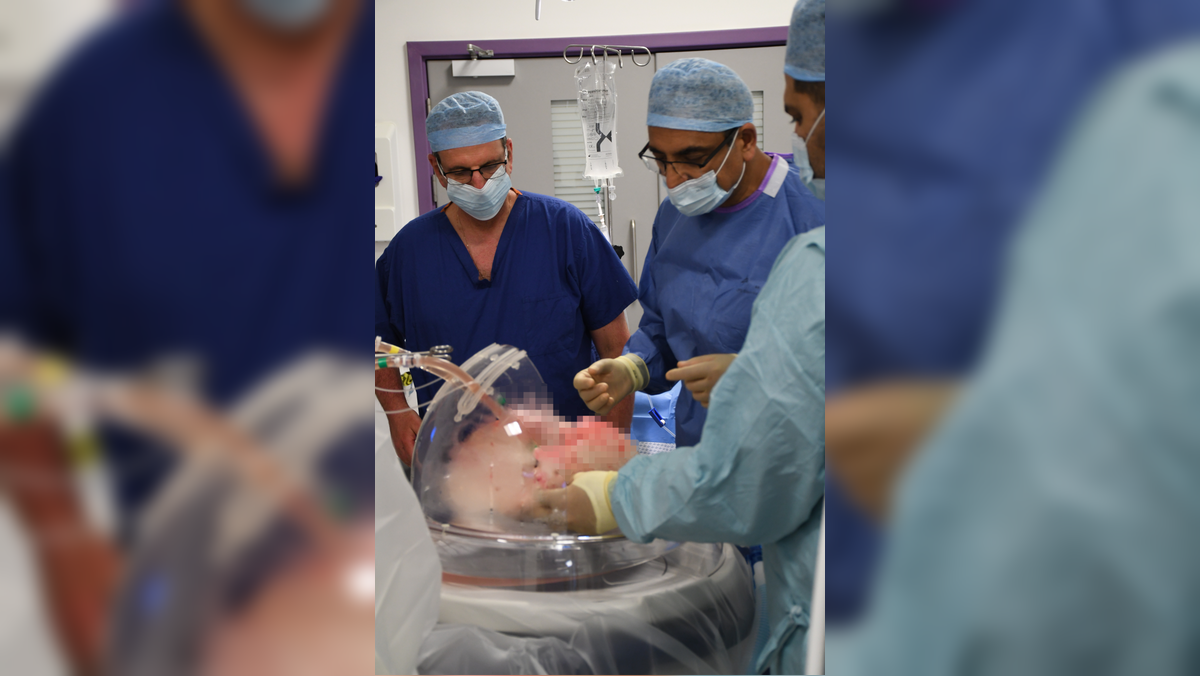
Queen Elizabeth Hospital Birmingham (QEHB) has carried out the UK’s first lung transplant through a landmark national pilot programme.
The procedure saw donor lungs, which may previously have gone unused, transported between three hospitals before being successfully transplanted into a patient at QEHB. The recipient is recovering well and has been discharged from hospital.
This marks a major milestone in efforts to increase the number of life-saving organ transplants.
QEHB was the transplanting hospital in the first lung transplant completed as part of the UK’s Assessment and Recovery Centres (ARCs) pilot programme.
Developed by NHS Blood and Transplant, in collaboration with the cardiothoracic transplant community, and funded by the Department of Health and Social Care, ARCs is the first national programme of its kind in the world.
ARCs introduces a new ‘three hospital’ approach to transplantation. An organ is donated at one hospital, taken to a specialist centre for assessment using machine perfusion technology, and then sent to a third hospital for transplant.
In this case, the lungs were donated at a hospital in the north of England before being transported to Royal Papworth Hospital in Cambridge for ex vivo lung perfusion assessment. They were then transferred to QEHB, where the transplant was carried out by the hospital’s specialist transplant team.
The programme aims to make better use of donated organs by giving transplant teams more detailed information about how well an organ is functioning before making a final decision about whether it can be used.
Some donated organs currently fall into a clinical “grey area”, where early assessments do not provide enough certainty for teams to proceed. Because decisions often need to be made quickly, some organs can be declined out of caution.
Through ARCs, organs can undergo further assessment at a specialist centre before being offered to another transplant team, helping clinicians make more confident decisions and potentially increasing the number of organs available for patients on waiting lists.
The model is expected to eventually increase the number of transplants by around 20%, potentially helping save or improve an additional 750 lives every year.
Aaron Ranasinghe, Consultant Heart and Lung Transplant Surgeon and Transplant Programme Lead at University Hospitals Birmingham, said: “This landmark transplant demonstrates what can be achieved when NHS organisations collaborate in new and innovative ways to make the very best use of donated organs.
“Through the ARCs programme, expertise from specialist teams across the country can be brought together to assess, preserve, and successfully transplant organs that may previously have been declined.
“For our patients, this represents more life-changing opportunities, and it is an exciting glimpse of the future. By enabling more detailed assessment of donor organs and extending the opportunities for organs to reach suitable recipients, we are honouring the precious gift from donors and their families.”
If successful, the ARCs pilot could become the standard approach for assessing organs that need further evaluation before transplantation, with dedicated specialist centres created in the future.
Health Minister Karin Smyth said: “This is a fantastic example of British medical innovation saving lives. I am incredibly proud that the UK is hosting the first national programme of this kind anywhere in the world, giving patients a better chance of a life-changing operation.
“This breakthrough could help save or improve an additional 750 lives every year, and it is a testament to the skill and collaboration of our NHS staff and scientists that the UK is a world leader in this field.”