Home phototherapy service reaches 2,000-baby milestone
Published on 20/08/2026
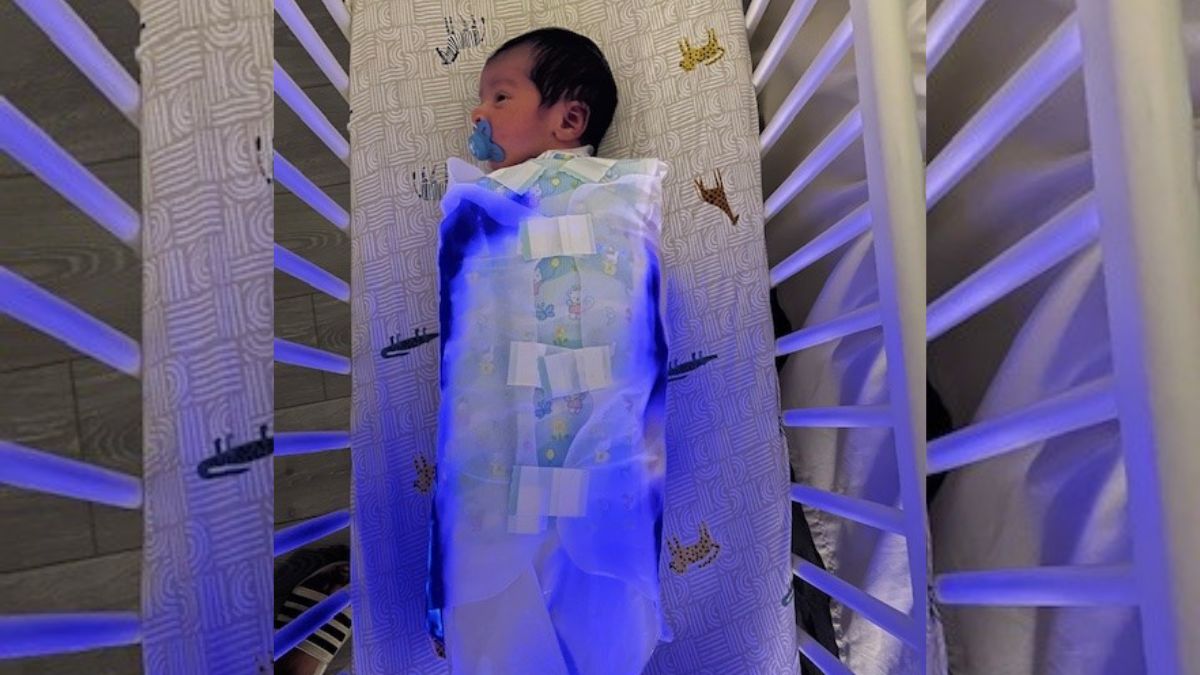
Two thousand babies – the highest number in the UK – have now been treated at home for their jaundice thanks to an innovative light therapy service.
The Home Phototherapy Service, delivered by the Neonatal Community Outreach Team (NCOT), supports families whose babies are born at Heartlands, Good Hope and Birmingham Women's hospitals. The specialist neonatal nurses who make up NCOT play a vital role in promoting and supporting safe, early discharge from the Neonatal Unit, ensuring babies with additional medical needs receive expert care in the comfort of their own homes.
Since launching in 2019, the Home Phototherapy Service has transformed the way babies with jaundice are treated. Phototherapy, traditionally delivered in hospital, can now be safely administered at home under the close supervision of the NCOT team. As a result, families avoid prolonged hospital stays or the disruption of readmission after discharge.
Sheena Lewis, Acting Lead Nurse for NCOT, said: “Before we launched this service, all the babies would have had to stay in hospital for longer or come back in once they had already been discharged.
“Being able to treat the babies at home means protecting them from the potential infections they would be exposed to by coming back to hospital, or the infections they might bring into hospital from home."
Phototherapy, also known as light therapy, is a treatment using a special type of light which makes it easier for newborn babies to break down and remove the bilirubin from their system.
Baby Eisa Rafeh was born at Heartlands Hospital in March and received phototherapy at home. His mum Mahreen said: “When we were told Eisa needed treatment for jaundice, we were worried and assumed it would mean staying in hospital for several more days. We had no idea that home phototherapy was even an option.
"Being able to take our baby home while still getting the treatment he needed made such a difference to us as a family. We could relax in our own surroundings, get some rest and spend precious time together without the stress of being on a busy ward.
"The team explained everything clearly and checked in with us every day, which gave us real peace of mind."
When the NCOT team identify a baby with jaundice they will meet with the family and, depending on the level of jaundice, give them special equipment which allows them to safely provide phototherapy treatment in the comfort of their own home.
On reaching the milestone Dr Richard Mupanemunda, Consultant Neonatologist, who set up the service, said: “Reaching 2,000 babies treated is not only a testament to the dedication and expertise of the NCOT team, but also highlights Heartlands Hospital’s commitment to innovative, family-centred care. As the largest provider of home phototherapy in the UK, the team at Heartlands Hospital continues to lead the way in delivering safe, compassionate neonatal services, focussed on improving patient care and experience.”
The NCOT team also supports the early discharge of babies and visiting them at home to help parents manage their baby’s medical needs such as the administration of certain medications including vaccines at home, nasogastric tube feeding, and caring for infants on home oxygen.
Parental feedback for the service for the service has been overwhelmingly positive. The service was awarded the Best Local Project in the UK by the British Association of Perinatal Medicine.