Impressive steps for Good Hope recycling project
Published on 05/06/2026
A project that recycles walking aids for patients is marking a year of significant financial savings, carbon reduction and improved patient safety.
Launched as a trial in May 2025 at Good Hope Hospital, the scheme was set up to encourage patients and families to return unwanted walking aids so they could be safely reused, refurbished or redirected where they are most needed. One year on, the impact of the initiative has exceeded expectations.
Since the scheme began, a total of 545 walking aids have been collected from the dedicated deposit box at the entrance to the Orthopaedic and Rehabilitation Centre. Items reused include walking frames, elbow crutches and walking sticks, helping ensure patients continue to access essential mobility equipment without delays.
Of the 545 items donated:
- 282 items (51.65%) were safely reused within Good Hope Hospital
- 174 items (31.93%) were returned to equipment provider Medequip for further review and reuse
- 67 items (12.29%) were donated to Africa for reuse
- 21 items (4.13%) were disposed of because they were not safe for reuse.
The scheme has also delivered financial benefits:
- £5,248.23 saved directly at Good Hope Hospital through reuse
- £2,900.74 saved by Medequip, based on an estimated 80% cost recovery rate for approximately 90% of items returned
- £8,148.96 total savings across the Birmingham and Solihull Integrated Care System
- £503.42 worth of items were deliberately discarded because they were unsafe for reuse.
In addition to reuse within the NHS, the project has also supported people overseas. Over the past year, £2,017.61 worth of equipment was donated to Africa. These items included items such as aircast boots and wooden walking sticks which cannot be safely refurbished within NHS facilities but remain suitable for reuse in other healthcare settings overseas.
Reusing walking aids rather than manufacturing new ones has also delivered substantial environmental benefits, particularly given the carbon intensity of aluminium production.
Over the past year, reuse of frames, crutches and walking sticks has resulted in:
- 7.15 tonnes of CO₂ saved at Good Hope Hospital
- 5.39 tonnes of CO₂ saved through Medequip returns
- 12.54 tonnes of CO₂ saved in total.
By ensuring unsafe equipment is removed from circulation while reusable items are quickly returned to patients, the scheme has improved both patient safety and access to mobility aids. It has also reduced waste and eased pressure on equipment budgets.
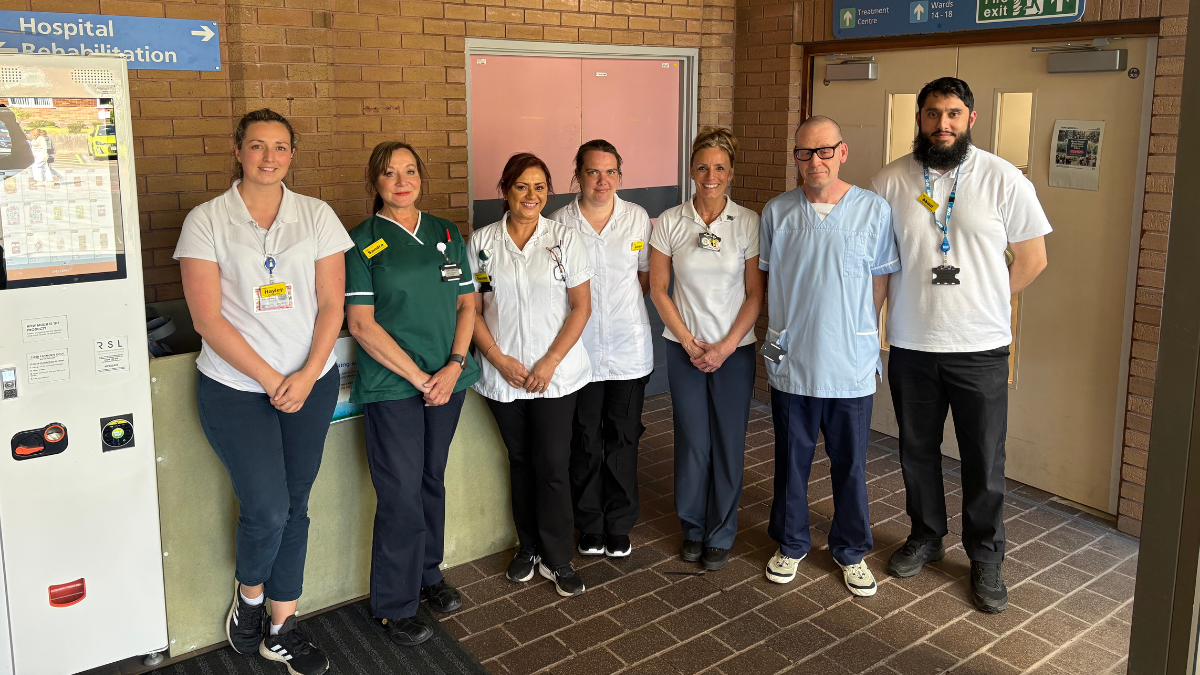
The project was led by Hayley White, Reconditioning Clinical Specialist. As it enters its second year, Hayley hopes even more patients and families will continue to return unwanted walking aids, helping to build an even greener, safer and more cost effective service for the future.
Hayley said: “I couldn’t be prouder of what this project has achieved over the past year. What started as a simple idea has grown into something that has made a real difference - improving patient safety, supporting sustainability, and delivering meaningful financial savings across the system.
"To see hundreds of walking aids returned, reused, and even sent on to support people beyond the NHS is incredibly rewarding.”