New groundbreaking technique introduced at QEHB
Published on 12/08/2026
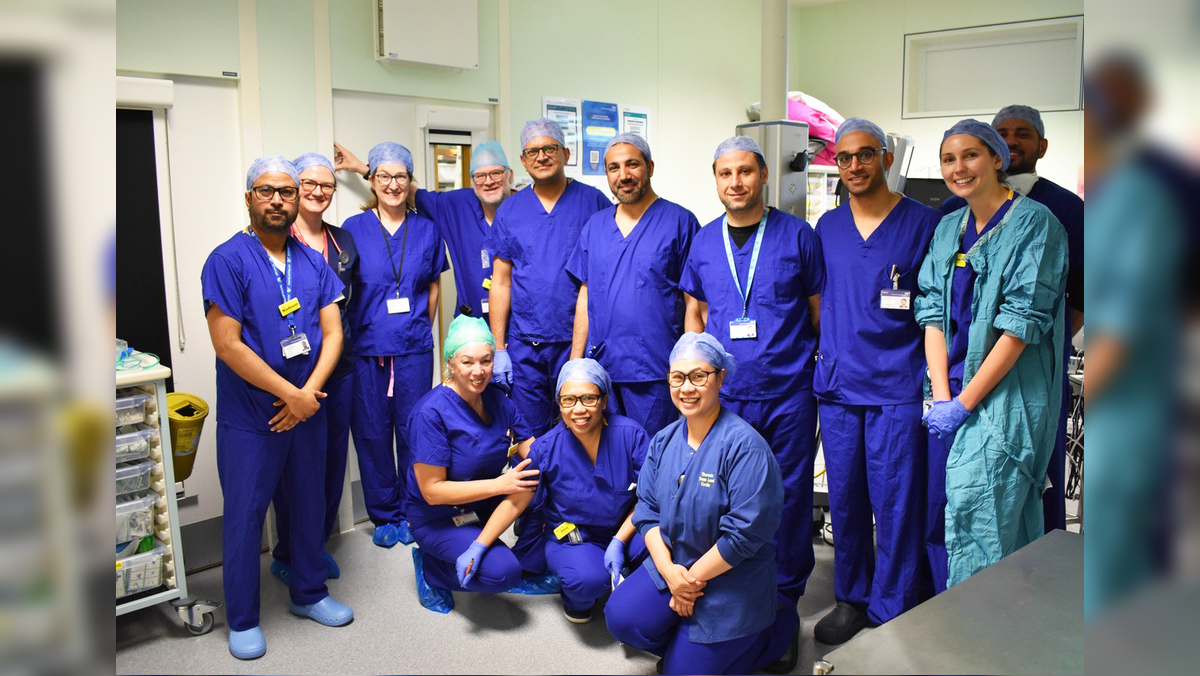
The Respiratory Team at Queen Elizabeth Hospital Birmingham (QEHB) has successfully performed its first endobronchial ultrasound (EBUS)-guided cryo-biopsy, marking a significant advancement in diagnostic practice.
This minimally invasive technique combines real-time ultrasound guidance with controlled freezing to obtain larger, higher-quality tissue samples from mediastinal lymph nodes.
Compared with traditional methods, cryo-biopsy preserves tissue architecture, enabling more accurate diagnosis and supporting advanced molecular and genetic testing.
The team is led by Dr Nadeem Maddekar and Dr Muhammad Ziaullah Khan, Dr Farrukh Rauf, Dr Benjamin Sutton and Dr Patricia Glyn.
Dr Maddekar, Respiratory and General Medicine Consultant, said: "We are very pleased to have introduced this technique at QEHB. The approach is expected to reduce the need for more invasive surgical procedures, improving patient safety and recovery while also easing demand on theatre capacity.
"This milestone reflects our team’s continued commitment to service development, novel therapies, innovation and excellence in patient care."