Queen Elizabeth Hospital Birmingham’s dance medicine expert shares knowledge with international peers
Published on 15/04/2026
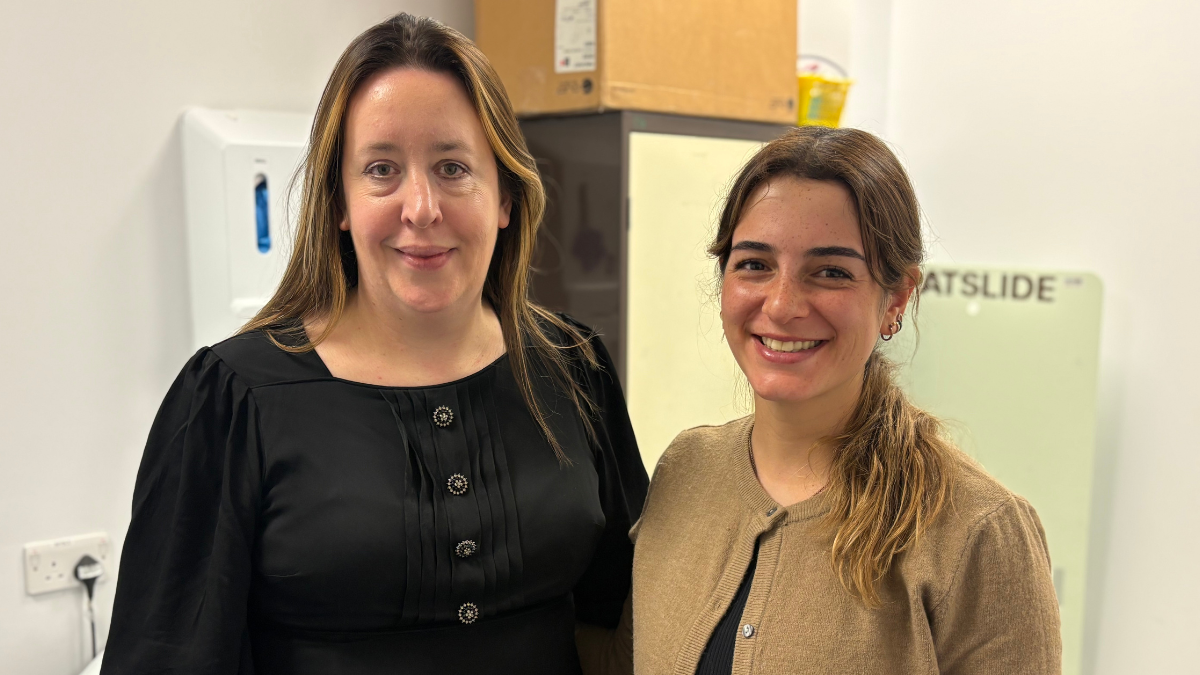
A visiting sports medicine doctor from Chile has been gaining first-hand experience of one of the UK’s leading NHS dance injury clinics during a placement at Queen Elizabeth Hospital Birmingham (QEHB), part of University Hospitals Birmingham NHS Foundation Trust (UHB).
Dr Maria Gonzalez spent two months observing how clinical care and the performing arts intersect, working with Birmingham Royal Ballet and embedding herself within the dance medicine service at QEHB, where she shadowed clinics treating dancers from across the country.
“It’s a unique opportunity,” Maria said. “In Chile we have sports medicine doctors for sport, but not many focused on ballet. It’s a relatively new speciality for us. I wanted to learn what’s happening here in Birmingham and see how we might develop something similar back home.”
The clinic, which runs out of QEHB, is part of a clinical partnership with the National Institute of Dance Medicine and Science (NIDMS), that connects dancers to specialist NHS services. UHB is one of four NHS dance injury clinics in the country, alongside two in London and one in Bath.
Led by Consultant Physician in Sport and Exercise Medicine, Dr Kim Gregory, the Birmingham service has been running since 2013 and has grown steadily over the past decade. It now sees an increasing volume of referrals from across the UK, with dancers often travelling significant distances for specialist care.
The clinic is open to anyone over the age of 14 who is physically active, with no upper age limit. Dancers face unique physical demands, and the service provides access to clinicians who understand those demands and the specific injuries associated with multiple dance genres.
The multidisciplinary team includes a sports and exercise medicine consultant physician, a consultant physiotherapist, specialist musculoskeletal physiotherapists, a dietitian and a podiatrist, all with a shared interest in supporting dancers.
Providing early access to clinicians with dance-specific expertise can speed up recovery and reduce the need for multiple NHS appointments.
Maria, who trained in ballet from the age of five to 17 before pursuing medicine, said: “In Chile, dancers often struggle to find clinicians who understand the physical and artistic demands of their profession. It’s difficult to find someone who knows how dance works and what the most common injuries are. We have to research everything ourselves. A clinic like this gives dancers the proper care they need.
“Our public and private healthcare system is similar to the UK, so being here has given me a much clearer view of how a service of this kind can work.”
Kim added: “It’s been great having Maria with us. Having conversations about medicine, patient and clinician experiences and the associated barriers confirms that many of the challenges are similar in Chile. The arts don’t always receive the same level of funding and investment, so building links and sharing knowledge internationally is important.”
As part of NIDMS and through its working relationship with Birmingham Royal Ballet, the UHB team is also involved in supporting research, contributing to a growing evidence base around dance health and injury prevention.
Kim said: “There is a need for knowledge sharing between professionals in this field, as many gain niche areas of expertise within dance medicine. Having international colleagues like Maria strengthens that network even further.”
Dr Nick Allen, Clinical Director at Birmingham Royal Ballet, said: “One of Birmingham Royal Ballet’s strategic aims is to enhance dancer health and wellbeing, not only within the company but across the sector, so when we were approached about supporting Maria’s sports medicine fellowship it was an easy decision. It has given us the opportunity to share, learn and exchange ideas and form potential future collaborations that will enhance patient care in the future. We have a longstanding relationship with Dr Gregory and her team at UHB and I am grateful that she was able to accommodate Maria. It was important to give Maria an understanding of the comprehensive care afforded to dancers in the UK through UHB.”
Erin Sanchez, Head of the National Institute of Dance Medicine and Science, added: “Dancers require affordable, dance-specific healthcare to sustain their health and wellbeing, address injuries, and perform at their best. The National Institute of Dance Medicine and Science is a world leader in the provision of accessible, dance-specific healthcare, and a pioneer in providing this support through a strong partnership with the NHS. We are proud that our excellent clinicians are able to share their knowledge, experience, and practice with colleagues to enable dancers in other countries to benefit from vital healthcare support.”