Solihull Hospital achieves milestone with 1000th robotic surgery
Published on 22/11/2024
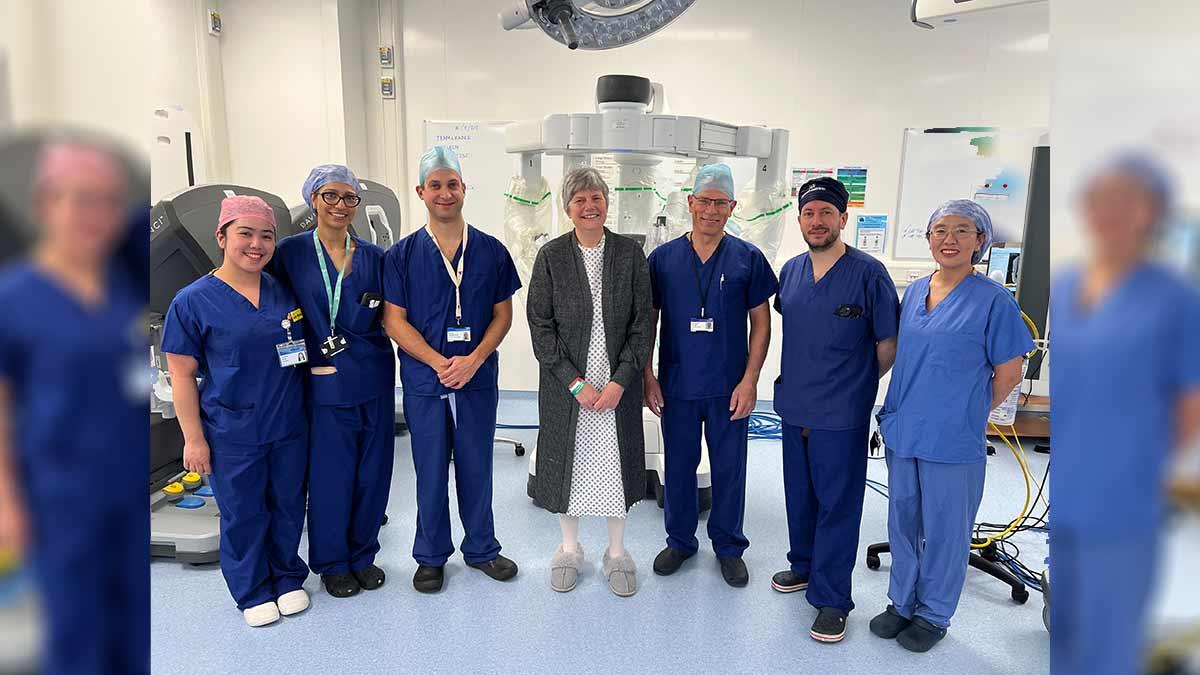
This week, surgeons at Solihull Hospital reached a key milestone by performing the 1000th robotic surgery at University Hospitals Birmingham NHS Foundation Trust (UHB).
This landmark procedure was carried out in the hospital’s new state-of-the-art elective hub, using the advanced da Vinci robotic surgical system.
The robotic system, featuring four thin robotic arms, offers several advantages over traditional surgery, including a significantly greater range of motion, enhanced precision, and a less invasive approach.
This results in better patient outcomes such as reduced complications, faster recovery, and less post-operative pain.
By combining the surgeon's expertise with cutting-edge technology, robotic surgery ensures more successful, efficient procedures.
Denise Taylor, from Sutton Coldfield, was the 1000th person at UHB to undergo robotic surgery. Following a bowel cancer diagnosis in June this year, Denise received surgery to remove a tumour from her bowel.
Denise said: “As the 1000th patient, I feel a sense of relief, knowing the equipment has been used many times before! I’ve been assured that robotic surgery is the best way to perform the surgery, for the best results, and that’s the most important thing.
“It’ll be great to get back to normal, especially running. Every time I’m unwell, it sets me back. I completed the London Marathon earlier this year, and I’m looking forward to building up my fitness again.”
Mark Dilworth, Consultant Colorectal and Paediatric Surgeon at UHB, said: "It's fantastic to have reached this milestone in robotic surgery at UHB. With two state-of-the-art robotic systems now in our new hub at Solihull Hospital, the future looks incredibly promising.
“These advanced technologies will allow us to significantly enhance patient outcomes through greater precision, faster recoveries, and improved surgical results.
“As we integrate these systems further into our practices, we look forward to performing more surgeries with robotic technology, continually advancing the care we provide.”
In the Photograph, from left to right: Leo Rose Madla, Theatre Sister, Rupaly Pande, Doctor ST6, Sofoklis Panteleimonitis, Consultant in Colorectal and General Surgery, Denise Taylor, patient, Mr Stephan Korsgen, Consultant Surgeon, Ian Walker, Consultant Anaesthetist, Furong Wang, Healthcare Assistant