Stripes on show for Rare Disease Day
Published on 16/03/2026
Each year on the last day of February, Rare Disease Day brings people together around the world to raise awareness and advocate for those living with rare conditions.
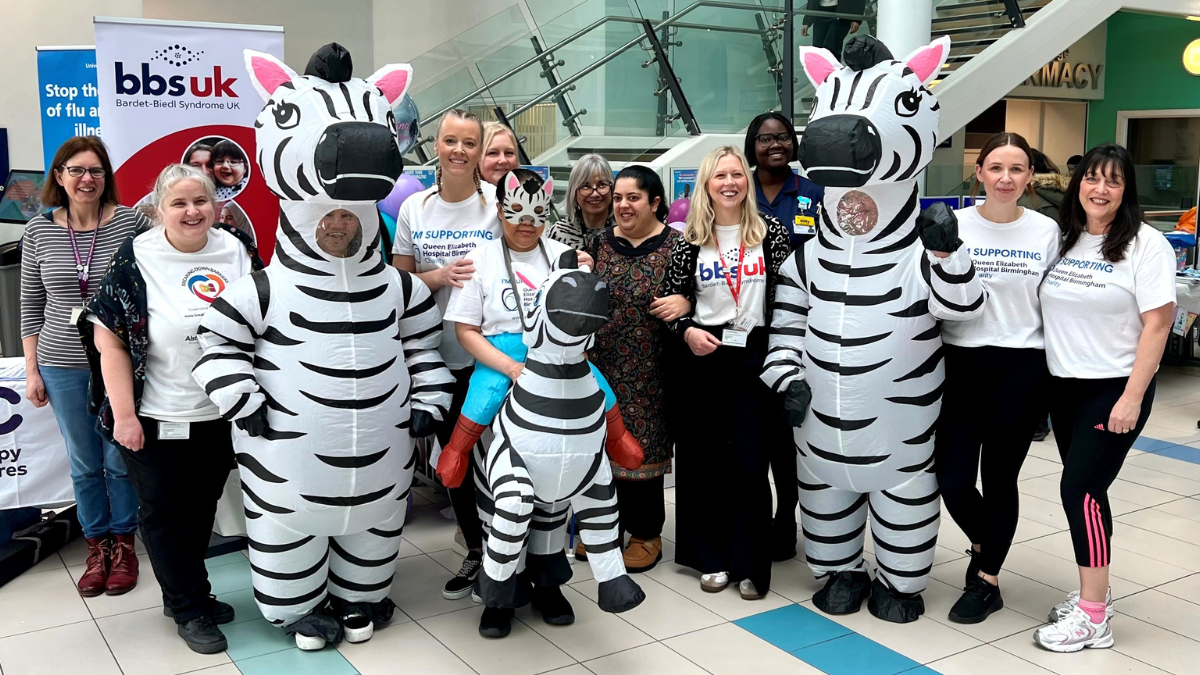
This year, our team from the Centre for Rare Diseases at Queen Elizabeth Hospital Birmingham (QEHB) marked the occasion by hosting awareness stands and ‘showing their stripes’ in the hospital’s main atrium.
Colleagues dressed as zebras - the official mascot for rare disease patients - and created a fun and eye-catching display to draw attention to rare diseases.
Historically, medical professionals were taught the phrase: “When you hear hoofbeats, think horses, not zebras” - meaning doctors should first look for the most common explanation. But many patients are ‘zebras’, living with rare conditions that are not always immediately recognised, which is why raising awareness is so important.
The awareness stands featured representatives from the charities Bardet-Biedl Syndrome UK and Alström Syndrome UK, alongside the Advanced Therapy Treatment Centre (ATTC) network, who shared information about advanced treatments in rare disease care.
Alström syndrome is a complex genetic disorder that can cause early-onset sensory loss (blindness and deafness), obesity, type 2 diabetes, and potential organ complications. Alström Syndrome UK provides support to people living with the condition, including Abdullah, a patient at our Centre for Rare Diseases at QEHB.
Abdullah attends regular check-ups with the multidisciplinary team, including MRI scans, FibroScans (ultrasounds that measure liver inflammation), electrocardiograms (ECGs), and blood tests.
Abdullah said: "Living with Alström syndrome isn’t easy. Since my diagnosis, I’ve found it harder to go out and stay active, but I’m still trying to live life to the fullest. I’m currently completing my master’s at Birmingham City University. The support I receive from Alstrom Syndrome UK and the team at QEHB helps me to manage my condition whilst I complete my studies.”
A rare disease is defined as a condition affecting fewer than 1 in 2,000 people. There are over 7,000 recognised rare conditions, and an estimated 3.5 million people in the UK are living with one.