UHB clinicians contribute to breakthrough breast cancer research
Published on 09/07/2026
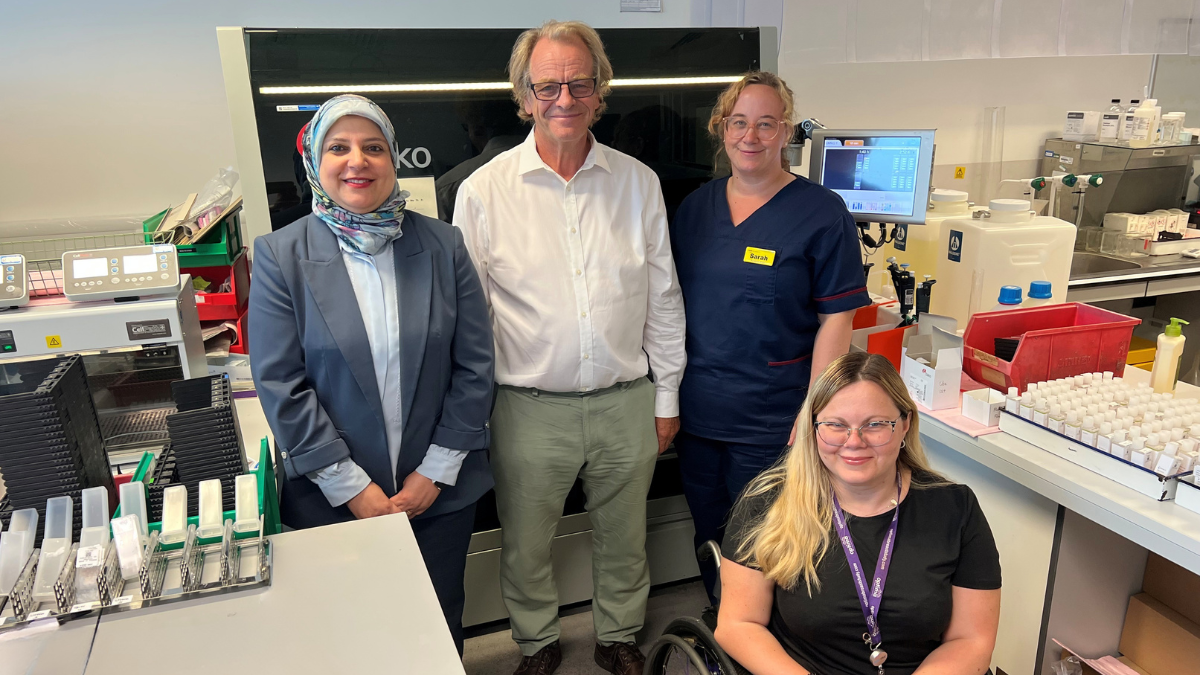
Two University Hospitals Birmingham clinicians have played a key role in groundbreaking international research that could spare thousands of breast cancer patients from unnecessary chemotherapy.
Professor Dan Rea, Consultant Medical Oncologist, and Professor Abeer Shaaban, Consultant Pathologist at Queen Elizabeth Hospital Birmingham (QEHB), are part of the international team contributing to the major OPTIMA clinical trial - the findings of which are now being highlighted globally following national media coverage.
The study tested the use of a genomic tool, known as the Prosigna test, which analyses the activity of 50 genes within a breast cancer tumour.
By using this test, clinicians can better understand how likely a patient’s cancer is to return and whether chemotherapy will make a meaningful difference to their outcome.
Results from the international trial, which involved more than 4,400 patients, showed that many people with the most common type of breast cancer can safely avoid chemotherapy and instead be treated with hormone therapy alone, without increasing the risk of the cancer returning.
Chemotherapy remains an important and often life-saving treatment. However, it is associated with well-known side effects, including fatigue, nausea and longer-term health risks and, less commonly, life-threatening complications.
The OPTIMA trial helps address a long-standing clinical challenge: identifying which patients will genuinely benefit from chemotherapy, and which patients can avoid it without compromising outcomes.
For patients, this means fewer people may have to experience the physical and emotional impact of chemotherapy when it offers little additional benefit. This will also free up capacity in the oncology service for other treatments.
Professor Abeer Shaaban said: “It was an honour to be one of two pathologists who supported the Optima trial. The trial has shown that high-risk women with breast cancer and a low genomic score can avoid chemotherapy. This is practice-changing and will spare many women with hormone receptor-positive breast cancer the side effects of chemotherapy. We currently treat 100 patients to save two from disease recurrence.
“This work is an illustration of how well-designed and conducted clinical trials can provide the highest level of evidence to inform practice and is a major step towards individualised medicine.”
Professor Rea added: “OPTIMA is an academic study funded by the NHS and is a great example of how non-commercial research in the NHS can deliver really important results. We are looking forward to putting this into routine practice as soon as practical.
“The whole breast cancer research team at the hospital played an important role in delivering the results, with their long-term commitment helping to make this study possible. We would also like to thank all the patients who placed their confidence in us and showed great bravery in taking part in OPTIMA.”
The involvement of Professor Dan Rea and Professor Abeer Shaaban highlights the important contribution UHB clinicians continue to make to large-scale international research studies.
Both clinicians are part of the Trust’s multidisciplinary breast cancer team at QEHB, working alongside colleagues across oncology, surgery, imaging, pathology and research delivery to ensure patients can access cutting-edge trials and benefit from the latest evidence-based care.
QEHB was one of over 170 hospitals taking part in the OPTIMA study, with recruitment taking place over many years.
The findings from the OPTIMA trial are expected to influence how clinicians across the NHS and beyond make treatment decisions for breast cancer patients in the future, supporting a more personalised approach to care.
For UHB patients and staff, this research is a powerful example of how local expertise is contributing to global advances – helping to improve outcomes while reducing the burden of treatment wherever possible.
This article is part of our research news collection.
Visit our dedicated research site for more research and innovation news from UHB.