UHB launches Midlands first dedicated clinic for rare genetic sight loss condition
Published on 02/10/2026
University Hospitals Birmingham NHS Foundation Trust (UHB) has launched a dedicated clinic for people with Leber Hereditary Optic Neuropathy (LHON), a rare inherited condition that can cause severe sight loss and blindness.
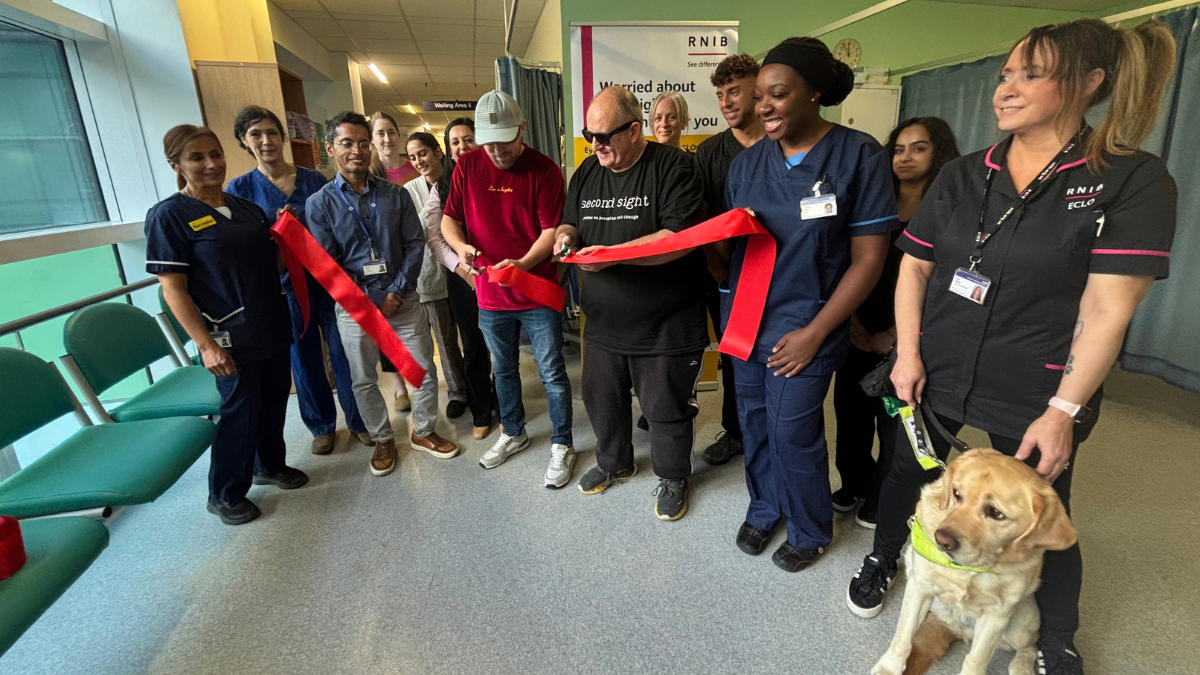
Patients Carl Peach and Ryan Malbon cut the ribbon to mark the opening of the new clinic based at Queen Elizabeth Hospital Birmingham, which will provide specialist monitoring, treatment and support for patients living with the condition.
LHON is a rare genetic condition affecting the optic nerve. Most patients experience significant sight loss, often at working age, which can have a major impact on their daily life.
The clinic follows the introduction of Idebenone, the first treatment licensed in England for LHON. UHB was one of the first centres in England to begin prescribing the treatment after gaining access earlier this year. Until recently, there was no licensed treatment available for people living with the condition, meaning care focused on monitoring, counselling and support.
Carl was diagnosed with LHON in August 2023 and has been treated with Idebenone for two months. He first started noticing that the words on his computer screen were blurred, deteriorating so rapidly that he could barely see his hand in front of his face four months later.
Carl sees his current treatment as providing a glimmer of light for the future and doesn’t let his condition stop him from pursuing his passions for poetry, public speaking, walking and going to the gym. He said “It makes a huge difference to have this clinic and know there is the potential for help. I can’t speak highly enough of the team at Queen Elizabeth Hospital. It is exciting to have this facility for people that are suffering from a rare disease and know you have people that have your back.”
Ryan noticed a decline in his vision in August 2022. Initially, as he was short-sighted, he assumed he needed a stronger prescription. After being referred by his optician to his local hospital and then to the service at Queen Elizabeth Hospital Birmingham, he received a diagnosis and specialist support. He said: “Having my sight deteriorate has been incredibly frightening, but I feel very fortunate to be receiving specialist care at Queen Elizabeth Hospital. My wife, Hayley, has been my biggest supporter throughout. I also owe a lot to my dog Chance. Taking him for walks helped rebuild my confidence and gave me the courage to get back out, whether to go to the shops or take my children to school. I am now studying psychology and completed the London Marathon in 2024, which are achievements I am incredibly proud of.”

Ryan with his dog Chance
Ajay Patil, Consultant Neuro-Ophthalmologist at UHB, said: "For many years there was very little we could offer patients diagnosed with LHON beyond support and counselling. The availability of this treatment means we can now offer an option that may help some patients recover vision to a clinically meaningful level.
"The clinic will allow us to bring patients together in a dedicated setting where they can receive ongoing monitoring, treatment and support from a specialist team. We hope it will improve outcomes for patients and help raise awareness of the condition."
Idebenone works by helping the body's energy-producinghelping optic nerve cells to produce energy more efficiently and therefore cells function more effectively. While it is not a cure, it can help some patients regain functional vision and improve their quality of life.
Patients are referred to UHB's Neuro-Ophthalmology service by eye health professionals from across the West Midlands and surrounding region. The service has expertise in diagnosing and managing rare conditions affecting the optic nerve, including LHON. The UHB Neuro-ophthalmology team are one of the largest in Europe, alongside a wider team of healthcare professionals.
The new clinic will support existing patients already receiving treatment, as well as people newly diagnosed with the condition in the future.