Complex surgery during challenging times
Published on 01/03/2022
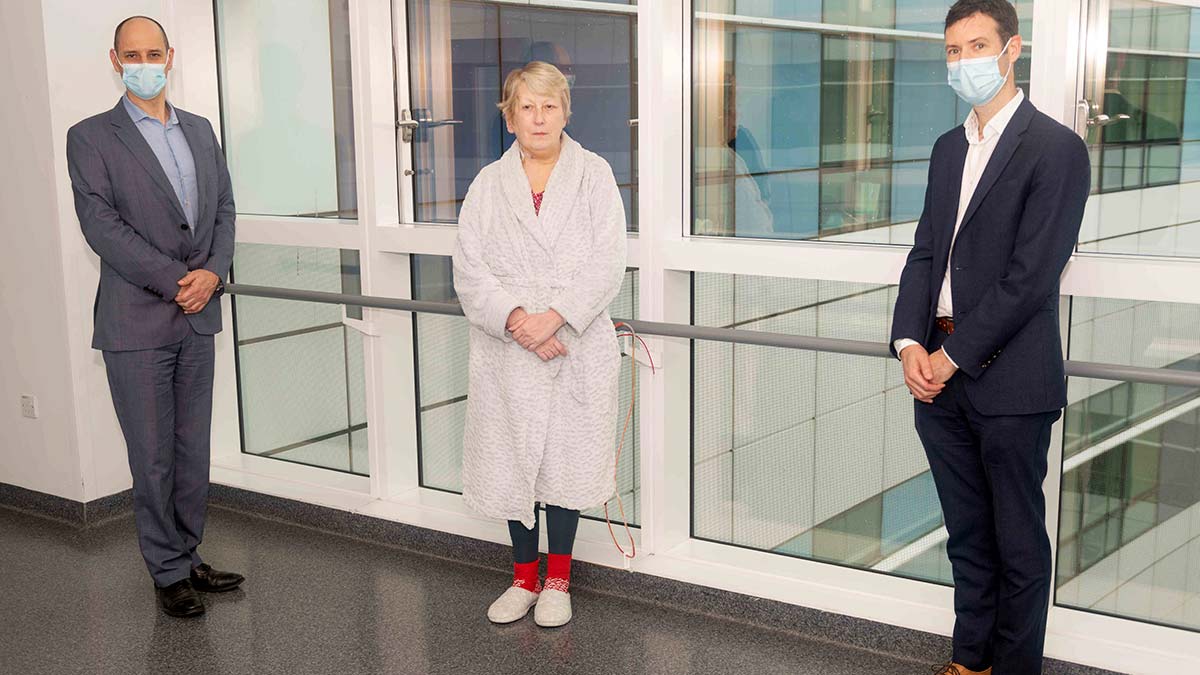
Having long, specialised surgery can be daunting for many of our patients, and this was especially true during the uncertain times presented by the COVID-19 pandemic.
Despite the demands on our services, the University Hospitals Birmingham (UHB) Skull Base service worked together to ensure the complex 10-hour procedure needed by patient Mary McHale took place.
After a long history of cancer treatment at a hospital in Coventry, including surgery and radiotherapy for brain cancer in 2011, and then surgery at Queen Elizabeth Hospital Birmingham (QEHB) for a tumour in her ear to treat a type of aggressive skin cancer called squamous cell carcinoma (SCC), reconstructive surgery was the preferred option to fill the void where the tumour had been.
This sophisticated reconstructive surgery required transplanting muscle from under Mary’s arm to her skull.
Along with the co-ordination required to ensure different specialties could work together, including members of the Ear, Nose and Throat ENT and Plastics teams, support and reassurance from clinical nurse specialists ensured that Mary felt supported and reassured. With visiting restrictions in place, this was valuable to Mary in having people to talk to about any fears and to ask any questions about the procedure.
Mary said: “I am very grateful to the whole team and everything they have done, including those from theatres, EPOC, the surgeons, and staff on Ward 728. I cannot believe how well I have recovered so far from major surgery.
“They are all professional, hard working, and dedicated individuals and I can’t thank them enough.”
Mr. Demetrius Evriviades, Consultant Plastic Surgeon, said: “This lady's procedure, called microsurgery, is commonly performed at QEHB and allows for surgery of greater complexity to be carried out and tumours to be removed which would not have previously been considered. It means that many more patients can be treated.
“In this case, this lady needed the transplant to fill the void following removal of her cancer. It’s a delicate procedure – blood vessels were joined using a microscope and instruments that are finer than a human hair. Once the transplant had been joined to the blood vessels, we were happy that blood flow had been restored and that the transplant was safely in place.”
Mr Peter Monksfield, Consultant ENT Surgeon, said: “This operation is one we have performed before but it is very challenging in the current climate. We are proud of all of the staff that worked together to make sure this Skull Base team joint procedure could take place. This support made the whole process smoother in what are challenging times for the NHS. I’m sure that I can speak for everyone involved in that we wish Mary well on her treatment journey.”
Mary has been discharged from hospital and is continuing her recovery at home.