Emergency Department research study reaches milestone
Published on 16/05/2024
Good Hope Hospital’s first ever Emergency Department research study has recruited its fiftieth patient. The study, called Crash-4, could help improve the care of millions of patients in the UK and worldwide.
The aim is to provide reliable evidence about the effects of early treatment using tranexamic acid (TXA) on brain bleeds, disability, death, and dementia in older adults with a head injury.
TXA reduces bleeding and if early treatment is shown to have positive effects, this could have huge benefits for patients.
Patients can join the research study if they have had a head injury within the past three hours, they are over 50 years old and have symptoms of a head injury such as impaired consciousness, nausea, or vomiting.
Patients are given an injection of either TXA or a placebo injection of water into their muscles. Neither the research team, nor the patient, are aware which injection has been given. Patients are asked a series of questions when they are in the Emergency Department (ED) and are contacted again for more information when they leave hospital, or 28 days after the head injury occurred.
Recruitment to the study began in June 2022 with a target of 20 patients; the team have surpassed this with 51 patients already taking part. It’s the first study the team has set up and recruited to in the Emergency Department.
The principal investigator (PI) for Crash-4 research study is Dr Sarafina Vatharkar, who is the clinical service lead for Good Hope ED.
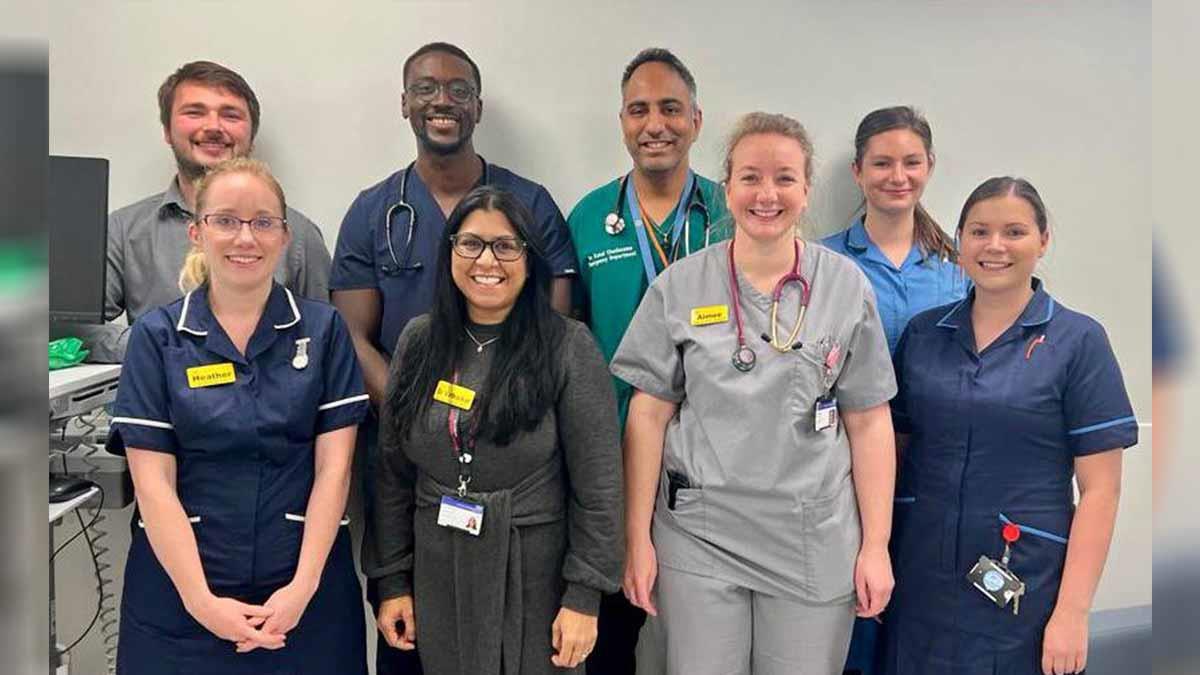
Heather Willis, Senior Research Nurse for Clinical Trials, said:
“Dr Vatharkar has been instrumental in setting up the study and in its success here; she is very passionate about research, and we are fortunate to have such an enthusiastic PI who trains the doctors and advanced clinical practitioners (ACPs) herself.
“Our doctors and ACPs, specifically Dr Rele and ACPs Aimee, Clarice and Ruth, are readily available when the research team find potential Crash-4 patients. As a research team we are very grateful to them and, of course, to our patients who give their time to the study.”
Crash-4 is also running at the Queen Elizabeth Hospital Birmingham and the plan is to open at Heartlands Hospital in the coming months.
Good Hope’s Core Research Team is made up of three clinical research nurses and a senior data manager. The team recruit to studies across a wide range of disease areas and specialties.
Dr Vatharkar concluded, “Our research team are so dedicated and working with them is a real pleasure. I would encourage all my colleagues to get involved with research if the opportunity comes along. By working together, we can help make a difference to patient care.”