Norovirus advice
Published on 28/03/2024
Norovirus is a stomach bug that causes sickness and diarrhoea.
Cases are rising in Birmingham, Solihull and across the UK.
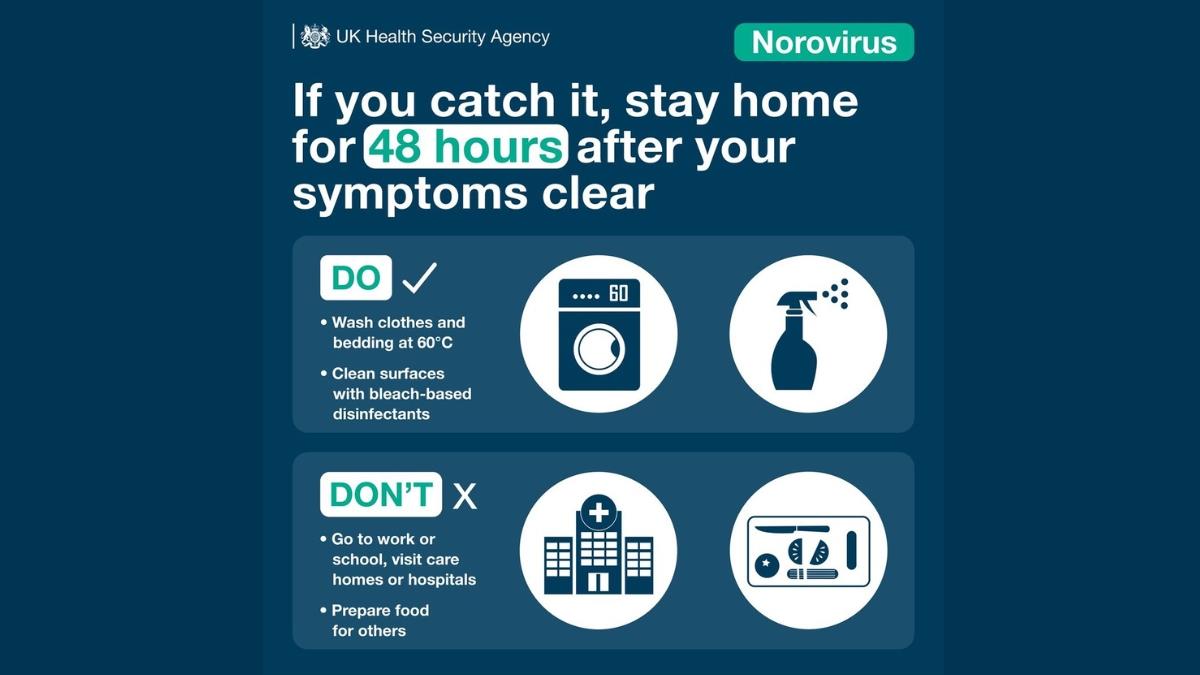
It is very important that any visitors with diarrhoea and/or vomiting do not visit any of our hospitals, until they have been free of symptoms for 48 hours.
Visitors are requested to practice good hand hygiene (washing with soap and warm water) and use alcohol hand gels to help prevent any further spread of infection.
There are some simple steps you can take to help stop norovirus spreading:
- Stay at home for 48 hours after the symptoms have stopped. If you are concerned about your symptoms, talk to your GP by phone, contact NHS 111 or visit the NHS norovirus webpage:
- Vomiting and diarrhoea causes your body to lose water and salts, which can lead to dehydration, so it is important to drink plenty of fluids to prevent this. Elderly people, young children and those with weakened immune systems are at most at risk of becoming dehydrated.
- Avoid cooking and helping to prepare meals for others until 48 hours after symptoms have stopped, as norovirus can be spread through contaminated food.
- Wash any contaminated towels, clothing or bedding using detergent and at 60°C, and if possible, wear disposable gloves to handle contaminated items.
- To disinfect contaminated surfaces, use bleach-based cleaning products, where possible.
- Norovirus cannot be treated with antibiotics. This is because antibiotics work to fight bacteria and not viruses.