Unique trial to tackle rare disease
Published on 06/04/2023
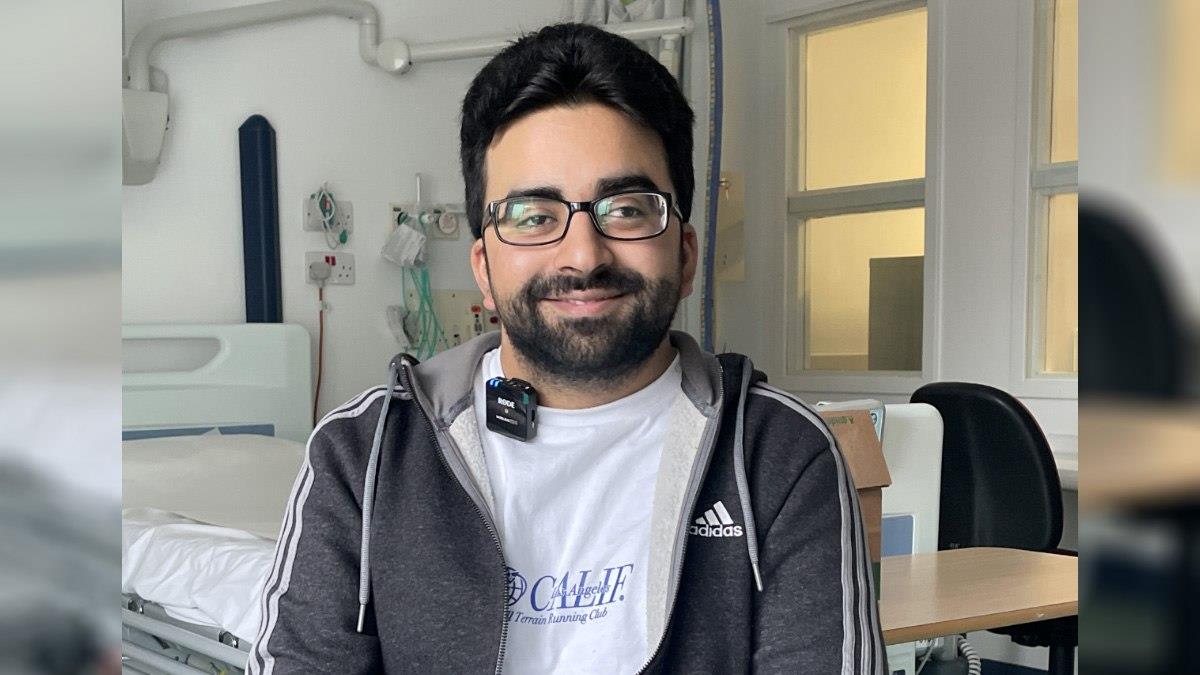
A patient, who is one of only two people in the UK to have a rare inherited disease, has been taking part in a unique clinical research trial designed just for him.
Adil Khaliq, aged 24, is one of fewer than 100 in the world with Tangier disease, a inherited disease, which disrupts how our bodies normally use cholesterol.
This leads to fat deposition in the arteries, tonsils, heart and nerves and this can cause heart disease.
Adil was very young when he was diagnosed, after doctors found fatty deposits on his tonsils. As he has grown older, he has experienced weakness in his hands and legs and has frequent falls.
He also has to eat a low-fat diet, as high cholesterol can cause fat deposits to build up in his body and cause damage to his organs.
Until recently, the only way to treat Tangier disease has been a low-fat diet, but this is not cure, and patients often still develop disability.
Adil has been on a clinical research trial for two years, trialling a drug called Miglustat, which has slowed the progress of Adil's disease, including an improvement in his dexterity and fewer falls.
Professor Tarekegn Hiwot, Consultant in Inherited Metabolic Disorders, said: “Adil was enrolled onto a National Institute for Health and Care Research (NIHR) funded clinical trial to repurpose an existing drug.
Miglustat is currently used to treat Niemann-Pick type C, another rare disease that causes cholesterol and other fats to accumulate in the organs, but we wanted to see if it would be effective for Tangier disease.
The NIHR funded study was designed for just one patient, Adil – which is the first of its kind. Adil was treated for six months on Miglustat and then six months off for two years, effectively being his own ‘control’ in the research trial.”
Adil said: “It’s made a huge difference in my day-to-day life. Before I started to take Miglustat, I struggled to pick up heavy objects, eat with a knife and fork and once I came home from college and couldn’t turn my key in the door.
“My dad had to come home and let me in. The weakness would often move around, so just as one hand was regaining some dexterity, one of my legs would get weak.
“My quality of life is much improved now and I am so grateful for all the team at the Centre for Rare Diseases who have supported me.”