AI-driven technology does not speed up lung cancer diagnosis
Published on 15/07/2026
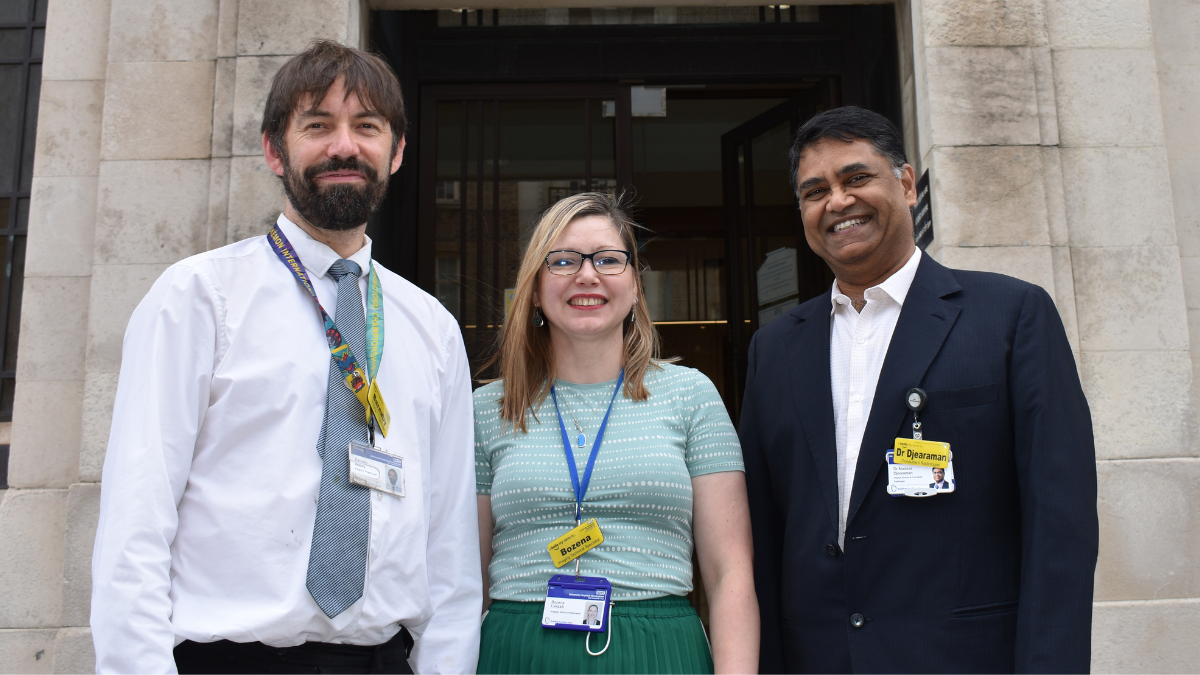
University Hospitals Birmingham (UHB) has contributed to a major national study exploring the use of artificial intelligence (AI) in diagnosing lung cancer.
Findings from the LungIMPACT study show that using artificial intelligence (AI) tools to read thousands of chest X-rays and prioritise abnormal ones did not lead to faster diagnoses.
The trial, the largest of its kind, was led by University College London (UCL), University College London Hospitals NHS Foundation Trust (UCLH), and the University of Nottingham, and ran between July 2023 and December 2024.
In total, 93,326 primary-care chest X-rays from 86,945 patients were analysed across five NHS trusts in England as part of the study.
At UHB, this included patients from a range of demographic backgrounds across Birmingham and Solihull, whose chest X-rays were referred by their general practitioners.
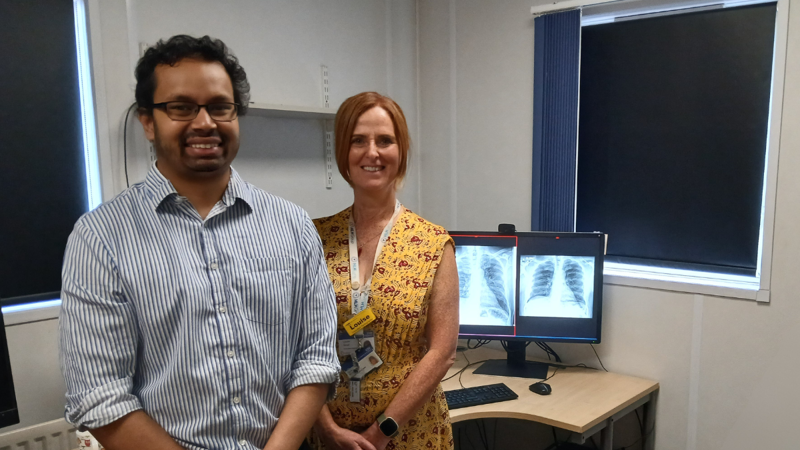
The trial found no significant reduction in the time from X-ray to cancer diagnosis, when AI flagged abnormal scans so that a radiologist could prioritise these for early review. The study, published in Nature Medicine, only tested the impact of AI prioritisation and did not change the usual care pathway.
AI prioritisation did speed up one part of the process: the median time for a radiologist to report on a chest X-ray fell from 47 hours to 34 hours. But this improvement did not cascade into faster progress through the rest of the diagnostic pathway. Referral rates, treatment start times, and cancer stage at diagnosis were all comparable across both groups.
Among the 558 patients diagnosed with lung cancer during the trial, the median time from chest X-ray to diagnosis was 44 days with AI prioritisation and 46 days without - a two-day difference that was deemed not statistically significant.
The median time from X-ray to the more detailed CT scan was identical in both groups at 53 days. The median time from chest X-ray to a fast-tracked CT scan (because cancer was suspected) was six days with AI prioritisation and seven days without, again not deemed statistically significant.
The trial also found that there were 53 cases where the AI flagged the X-ray as abnormal, but the radiologist’s report did not identify an abnormality. These patients waited a median of 106 days for their cancer diagnosis, significantly longer than when both agreed. The researchers say this group warrants urgent further investigation, as some could have been diagnosed at an earlier stage.
Dr Madava Djearaman, Consultant Cardiothoracic Radiologist and Principal Investigator of the trial at UHB, said: “We are keen to improve the health inequalities in Birmingham and Solihull. By participating in this trial, we wanted to make AI-guided programmes available to our patients. While the study disproved our hypothesis that AI would lead to earlier diagnosis, it revealed that the whole pathway needs investment, redesign and improvement from diagnosis to treatment.”
Madava added: “It was also interesting to note that the AI was better at identifying abnormalities which was overruled by human readers, leading to delayed diagnosis. The AI computes very differently from how we think and process information, and this may provide more opportunities for earlier and precise diagnosis from a very basic chest X-ray.”
The NHS’s own National Optimal Lung Cancer Pathway (NOLCP) specifies that patients should progress from a suspicious chest X-ray to a CT scan within 72 hours - ideally on the same day. The trial found that of more than 93,000 X-rays analysed, only 172 CT scans were performed on the same day, and just 477 within the 72-hour window. The NOLCP standard is being routinely missed regardless of whether AI prioritisation is active.
The authors argue that what is needed is not AI prioritisation alone, but a redesign of the whole pathway so that when AI flags a suspicious X-ray, a coordinated series of actions (CT booking, clinical review, specialist referral) is automatically triggered before the patient leaves the department. This will take investment in infrastructure and workforce, not just AI, the study concludes.